
Programme
Attendance is free, but registration via Eventbrite is required for both in-person and online participation.
- 09:00Check in
- 09:30Aula MagnaOpening & Welcome
- 10:00 –
10:30 Museu FBAUPPerformance Eik Elnes & Silvia Simões - 10:30 –
11:15 In PersonKeynote Eik Elnes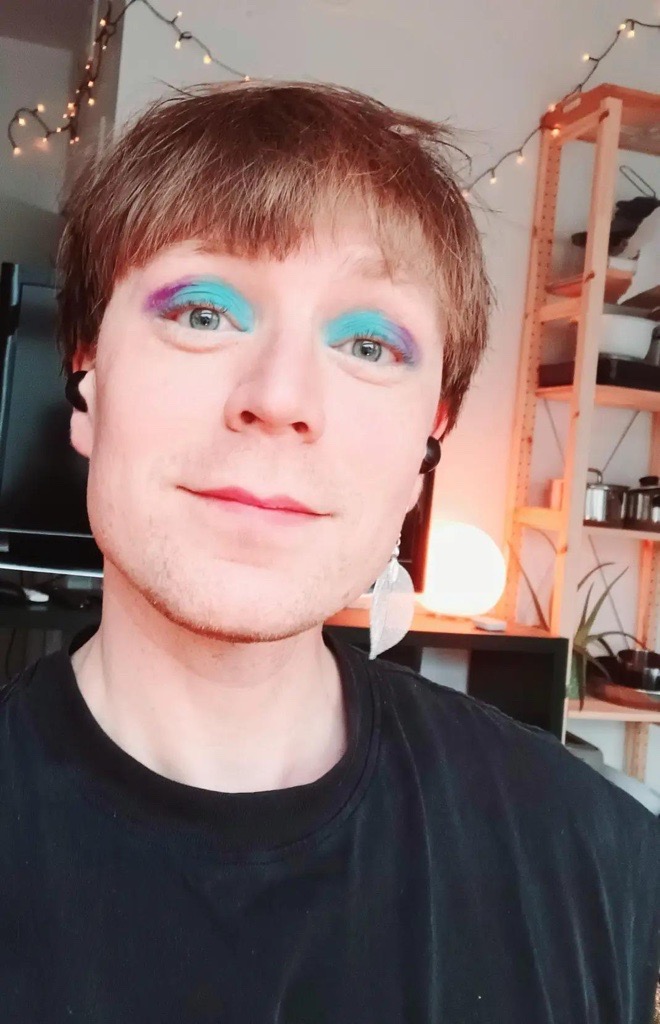 Choreographer and multimedia artist Eik Leknesund Elnes works across contemporary dance, visual art and physical theatre. Through improvisation, somatic exploration and collaboration, his practice engages with the spontaneous, the fragile and the imperfect, opening conversations about the body, movement and expression.
Instagram ↗ - 11:15 –
11:45 Coffee Break - 11:45 –
12:45 Parallel Sessions 1 & 2 - 13:00 –
14:30 Lunch Break - 14:30 –
15:30 In PersonKeynote Luna Maurer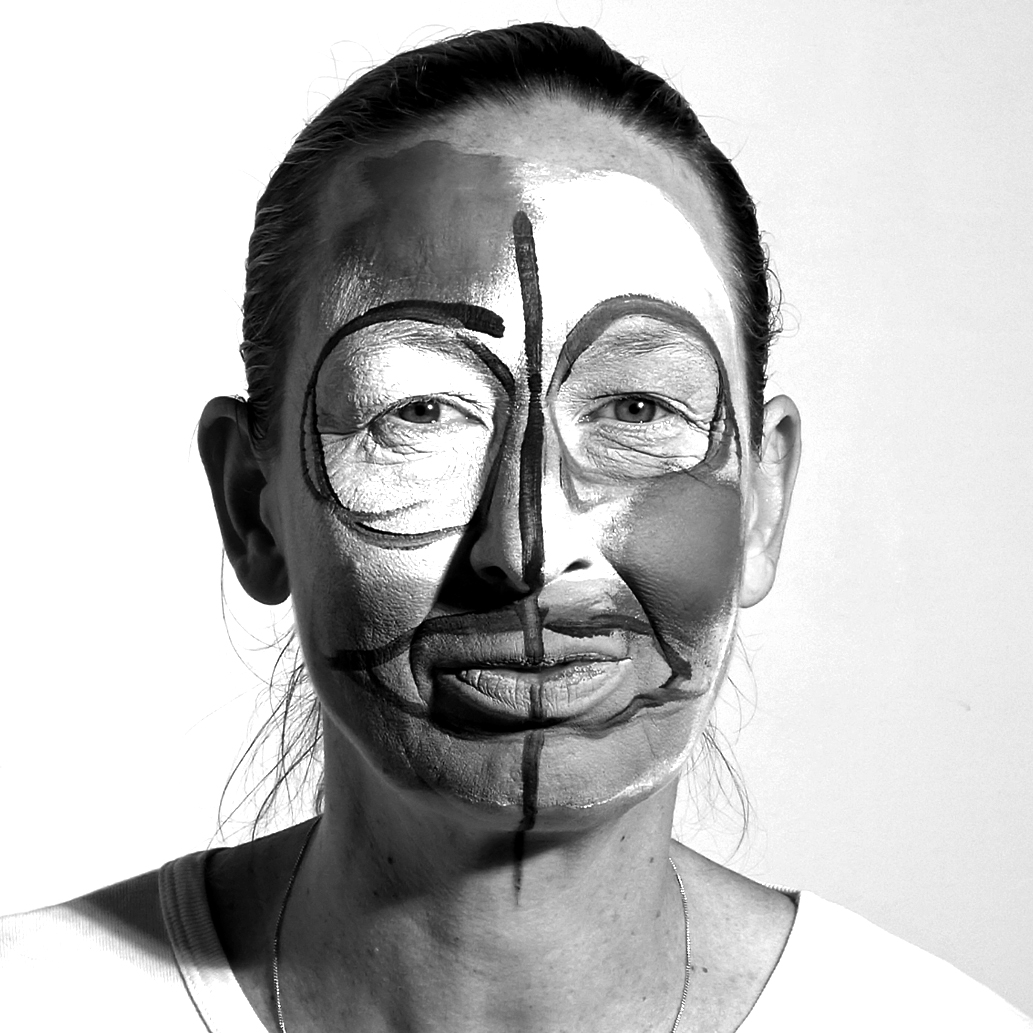 Designer, artist, co-founder of Moniker and co-author of Conditional Design and Designing Friction, Luna explores how digital technologies shape our human experience. Through participatory works, performance and experiments with dance and AI, her practice opens questions at the heart of XTREMERS: how do bodies, constraints and technologies shape expression, agency and connection?
Website ↗ - 15:30 –
16:30 Session 3 - 16:30 –
17:00 Coffee Break - 17:00 –
18:00 Session 4 - 20:00Symposium Dinner For those joining us in Porto, the symposium dinner offers an opportunity to continue the conversations in an informal setting. Please register for the dinner by 28 October, by emailing ssimoes@fba.up.pt. Dinner costs €35 per person, payable at the registration desk. Dinner registration is separate from symposium registration on Eventbrite.
Context
What happens when we design interaction from the edges rather than the normative centre of the spectrum of human experience?
XTREMERS explores the body as an interface. Not a body served by interfaces, but the body itself as the medium through which intention, expression and meaning take form.
The symposium convenes at two extremes, held in equal view. The first is Bodies of difference: bodies that operate outside normative assumptions through impairment, neurodivergence, or virtuosic expertise, bodies whose interfaces, designed from rather than around them, tend to produce insights we later cannot imagine living without. The second is Bodies in extreme circumstances: conditions that push any body past its ordinary range, from microgravity and deep isolation to disaster and sensory overload, where the normative body ceases to exist just as surely. What these extremes share is a single rupture: an interface built around a normative body stops working, and the body's own grain [rhythm, reach, timing, tremor, residual and minimal movements] becomes the matter of interaction.
Normative design conventions, standardised usability heuristics, ergonomic and anthropometric standards, the “normalised user” of human factors, treat such grain as noise, and the extreme as an edge case to be accommodated after the fact. XTREMERS begins from the opposite premise: extreme users should not be treated as outliers; they expose the standard as historical, situated, and partial.
This is where the symposium turns speculative. If the body at its limits reveals what an interface really is, it also opens what an interface could be. XTREMERS treats these edges as a laboratory for the future of embodiment: a place to prototype, provoke, and imagine, through art and performance as much as through science and design, how bodies, environments, and technologies might be otherwise entangled.
It aims to convene those who work at these edges across disciplines that rarely share a room: dancers, performers, and musicians who carry expert somatic knowledge; artists and architects who shape bodies in space and sound; designers, neuroscientists, and researchers in brain–computer interfaces, haptics, sonification, and human factors under extreme conditions. We call them xtremers. What unites them is a single proposition: that the body, at its limits, is the most revealing interface we have, and the most generative place to imagine what comes next.
Across both extremes, XTREMERS holds to a set of orienting commitments:
- that constraint is generative, expressive material rather than noise to be eliminated;
- that interaction is more than transmission, emergent and relational rather than the encoding and decoding of content;
- that the interface is embodied, the body an inherent part of the interface system rather than a channel to it;
- and that designing from the edge is speculative, the extremes sites for experimentation and provocation rather than accommodation.
Limitation runs through the symposium in two directions: for extreme users it is imposed, the grain of a body or an environment that will not be filtered away; in play it is chosen, the rule freely adopted because the limit is what makes the activity meaningful. XTREMERS holds both in view, and treats the one as a way of understanding the other.
Call for abstracts
Thematic Areas
XTREMERS invites extended abstracts from scholars, designers, artists, performers, architects, and researchers working within the expanded field of this theme. We welcome theoretical, practice-based, experimental, and speculative work, considering, but not limited to, the following thematic areas:
- Constraint as Generative Ground— friction, tremor, delay, difference, and the grain of the body as expressive and inventive material; the reframing of limitation from deficit to generative condition.
- Speculative and Critical Futures— cyborg and posthuman lineages; speculative, provocative, and design-fiction approaches; the politics and ethics of the non-normative body; imagined futures of embodiment and interaction.
- Bodies of Difference— impairment, neurodivergence, and non-normative morphology exposing the myth of the average user; the extreme user as a lens on the whole spectrum; critical-disability and crip-technoscience perspectives; co-design and co-authorship at the edge.
- Bodies in Extreme Environments— microgravity and space, disaster and emergency, deep isolation, sensory deprivation or overload; the built and spatial environment as interface; interaction reinvented under environmental duress.
- The Body as Instrument— dance, performance, music, and somatic/ somaesthetic practice; the trained, expert, or virtuosic body as a site of tacit and expressive interface knowledge.
- Interfaces at the Threshold— brain-computer interfaces, biosignals, gaze, haptics, sonification, and sensory substitution; direct and cross-modal channels that read from and write to the body.
- Beyond Assistive— expression, agency, and relation over efficiency, accuracy, and information transfer; the body as more than a vessel.
- Body in Play— games, exertion play, and critical/ ludic design as domains where constraint is deliberately embraced; accessible and adaptive play; the body at the edge of skill, rule, and pleasure; what voluntary limitation reveals about the interfaces we live with.
Keywords
Abstract Writing Guidelines
An interface never exists in the abstract. It exists for a particular body, in a particular situation, doing particular work. To make the context of the interface clear and comparable across such an interdisciplinary programme, authors are encouraged to define it through the 5W1H framework. This is not a checklist to complete, but a way to ensure the situated reality of the interface is legible to a reader from another discipline.
Making these dimensions explicit lets a neuroscientist, a choreographer, and an architect read one another's work on shared terms.
- Who — Whose body is the interface? Which user, population, or performer, and what places them at the edge: difference, expertise, or circumstance?
- What — What is the interface, and what does it do? The interaction or artefact at stake, and the expressive, communicative, or relational work it makes possible.
- When — Under what temporal conditions? Momentary or chronic, emergency or everyday, rehearsed or improvised; and how it accommodates variability and change over time.
- Where — In what environment or context? The stage, orbit, the disaster zone, the studio, the street, the home.
- Why — What is at stake? The motivation and value: access, expression, connection, knowledge, provocation, agency.
- How — Through what modality or mechanism? Neural, haptic, sonic, gaze, breath, biosignal, spatial: the channel through which the body interfaces, and how minimal or non-normative action is interpreted and amplified.
Submission Guidelines
- Submit extended abstracts of up to [1,500] words (excluding references), in English, following the provided template.
- Reviews will be double-blind: anonymise your file (omit author information and explicit self-citations).
- Accepted abstracts will be invited to give a [10-minute] presentation at XTREMERS.
- Online Publication Proceedings Book of Abstracts of the Symposium – with ISBN and DOI.
- All works must be original and not previously published.
- The symposium's working language is English.
- Submissions via Microsoft CMT.
Important dates
- Deadline for submissions
September 20October 10 - Notification to authors
October 10October 28 - Registration deadline for authors
October 27November 6 - SymposiumNovember 13
Venue
The symposium will take place at the Faculty of Fine Arts University of Porto, with an online component for remote participation.
Team
- Andreia Pinto de SousaHEI Lab, FCAATI, Universidade Lusófona
- Bruno GiesteiraID+, Faculty of Fine Arts, University of Porto
- Cláudia LimaID+, Faculty of Fine Arts, University of Porto
- Eliana SantiagoID+, Faculty of Fine Arts, University of Porto
- Manuel SilvaResearch Centre for the Science and Technology of the Arts, School of Arts, Universidade Católica Portuguesa
- Pedro Amadoi2ADS, Faculty of Fine Arts, University of Porto
- Pedro Cardosoi2ADS, Faculty of Fine Arts, University of Porto
- Silvia Simõesi2ADS, Faculty of Fine Arts, University of Porto
- Viviane PeçaibesULisboa / ITI
- Lara PortelinhaFaculty of Fine Arts, University of Porto
Registration
- Authors must register before October 27.
- Co-authors and the general audience should register before November 12.
- Registration is free. Please register via the Eventbrite page.